
I’ve worked in ecommerce for 5 years. I’ve built online stores, run them, and helped store owners as a freelance web developer. In that time I’ve looked at a lot of stores, big and small, and the same ecommerce mistakes show up again and again. The good news is that none of them need a big budget to fix. They need attention, a little data, and the willingness to try something new.
Here are the 5 ecommerce mistakes I see most often, why each one hurts your sales, and what you can do about it this week.
1. A great-looking website, but no marketing budget

This is the most common one. An owner spends weeks, and most of the budget, on a beautiful website: perfect colours, smooth animations, a stunning homepage. Then the store launches and nothing happens, because nobody knows it exists.
A good design helps visitors trust you and buy. But design does not bring visitors. Marketing does. A store with an average design and steady marketing will almost always beat a perfect store with no traffic.
The fix: plan your marketing budget before you plan your design. A simple rule is to keep at least as much for ads, content and follow-ups as you spend on the website itself. Start with one channel, such as Instagram or Google Shopping, and learn what works before adding more. Collect phone numbers and emails from day one so you can send WhatsApp or email follow-ups to people who didn’t buy the first time. You can see the kind of stores I have built on my portfolio page, and every one of them needed marketing after launch to grow.
2. Being afraid of RTO instead of studying it

RTO means return to origin. It is when an order is shipped but comes back to you undelivered or refused. Many store owners, especially those selling with cash on delivery in India, are afraid of RTO. Some panic and stop COD completely. Others ignore it and never look at the numbers.
The truth is that RTO is a normal part of ecommerce. Every business faces it. A typical RTO rate is 2% to 5%, and it changes with your product, price and customer type. Fashion with sizing issues or high-value COD orders usually has more. The problem is not RTO itself. The problem is not understanding it.
The fix: track your returns every month. Look at which products, which pincodes and which payment types come back the most. Then act on what you find. Better photos and size charts reduce returns from “it looked different”. A confirmation call or WhatsApp message before dispatch cuts fake orders. A small advance payment on risky pincodes filters out people who weren’t serious. Once you know your normal rate, you can plan for it in your pricing instead of being surprised by it.
3. Doing everything by hand in the AI era
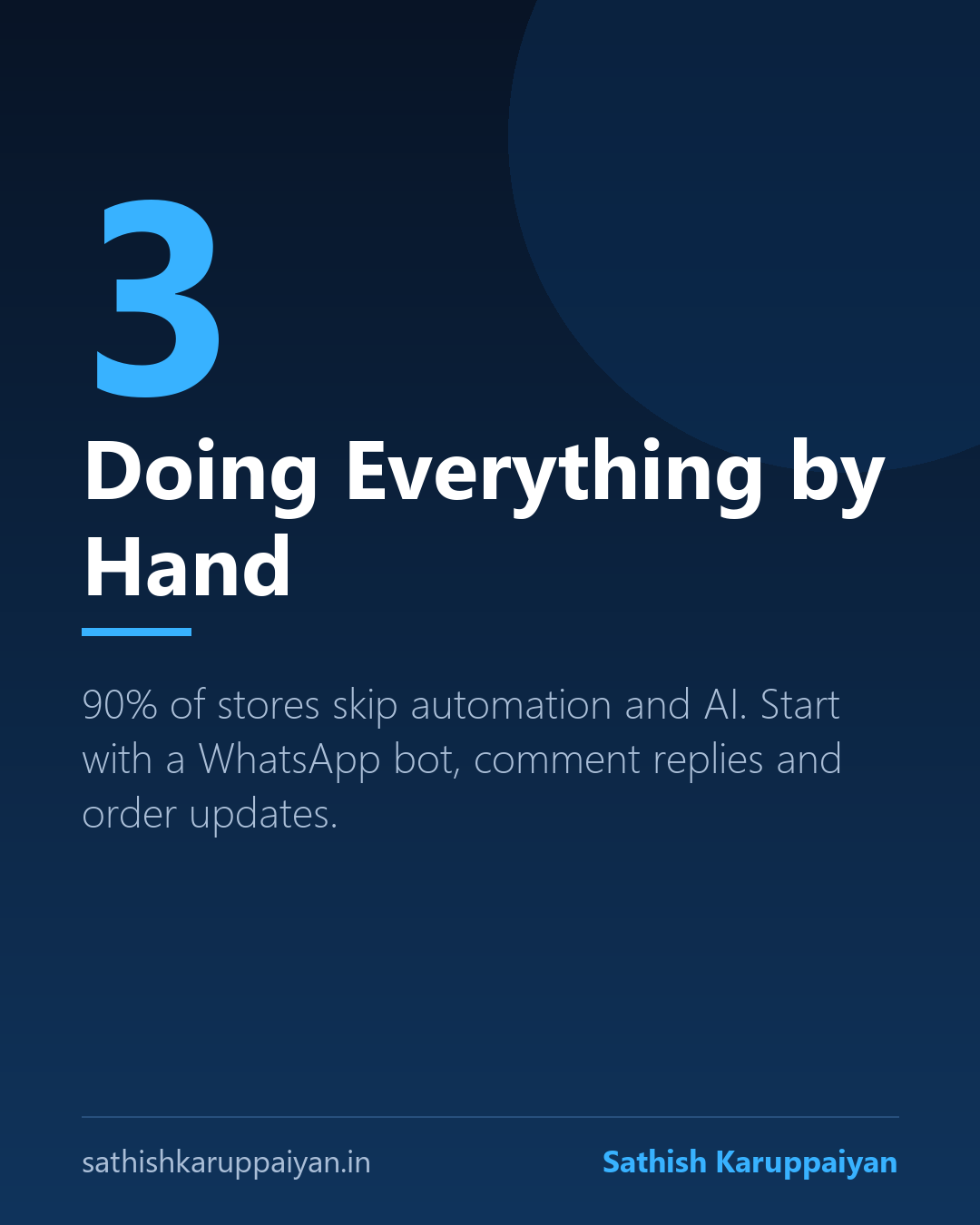
About 90% of the ecommerce businesses I see have no automation at all. The owner answers every comment, copies every order into a sheet and sends every tracking message by hand. That works with five orders a day. It breaks at fifty.
Manual work is slow, it is easy to make mistakes, and it takes time you could spend on growing the business. Meanwhile your competitors reply to customers in seconds, at any hour of the day.
The fix: start small. Set up a WhatsApp bot that answers common questions like price, delivery time and return policy. Use comment automation so that anyone who comments on your reel or post gets an instant reply with the product link. Automate your order flow, so confirmation, packing, shipping and delivery messages go out by themselves. AI agents can also help write product descriptions and reply drafts. You don’t need to automate everything. Pick the one task that eats most of your time and automate that first.
4. Never experimenting or reinvesting
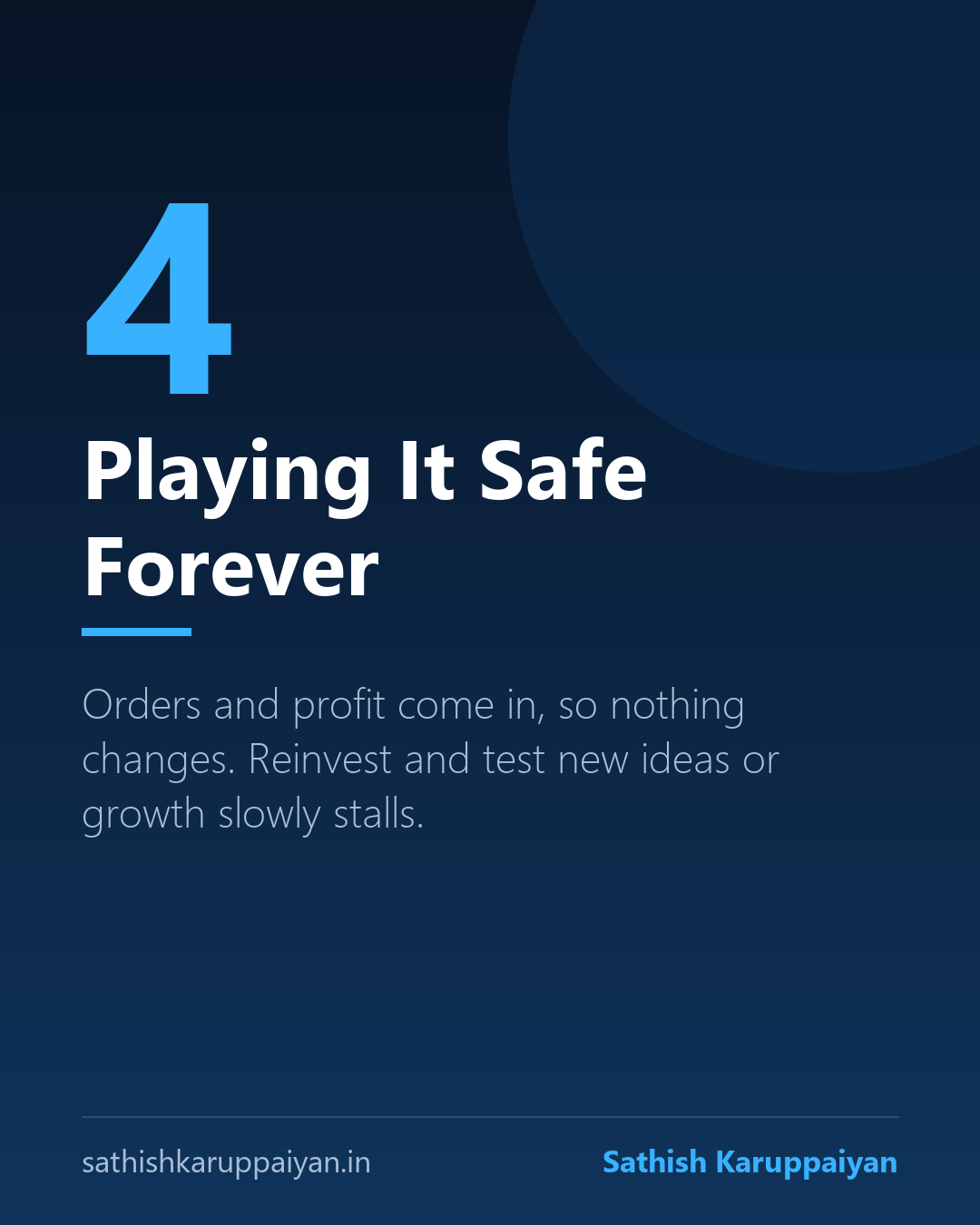
I often see owners who get orders, make a profit and then stop there. The store runs the same way for months. Same products, same photos, same offers. They don’t test new ideas, and they don’t reinvest their profit back into the business.
It feels safe, but it is actually risky. Customer tastes change, ad costs go up and competitors keep improving. A store that stands still slowly slips backwards. Sales drop a little each month, and by the time the owner notices, it is hard to recover.
The fix: treat your store like a lab. Each month, put a fixed part of your profit back into the business and test one new thing at a time. It could be a new offer, a new product page layout, a different ad creative or a faster checkout. Change only one thing, give it enough time, and measure the result. Keep what works and drop what doesn’t. Small tests are cheap, and they add up to big gains over a year.
5. Starting without proper research

Before you start an ecommerce business, you need proper knowledge and research. Many people pick a product because it looks trending or because a friend is selling it. Then they find out the market is crowded, the margins are thin, or nobody wants it at their price.
Research is not optional. It tells you if your idea can actually make money before you spend on stock, a website and ads.
The fix: research your niche properly before launch. Check product pricing and your real margin after shipping, packaging, ads and returns. Study market demand with Google Trends and marketplace listings. Look at your competitors: what they sell, how they price and what customers complain about in reviews. Talk to a few potential customers. Then launch with a small test batch instead of a big stock order, and scale only when the numbers prove it.
Quick checklist for your store
- Do I have a monthly marketing budget, not just a website budget?
- Do I know my RTO rate and which products or pincodes cause it?
- Have I automated at least one repeating task, like order updates or comment replies?
- Did I test one new idea this month and measure the result?
- Do I have real research on my niche, pricing and demand?
Final thought
None of these ecommerce mistakes are hard to fix, and every one of them costs you sales if you ignore it. You don’t have to fix all five at once. Pick the one that sounds most like your store and start there this week. Small, steady improvements are what turn an average online store into a growing one.
If you run an online store and want a second pair of eyes on it, send me a message. I’m happy to take a look and tell you honestly what I would fix first.